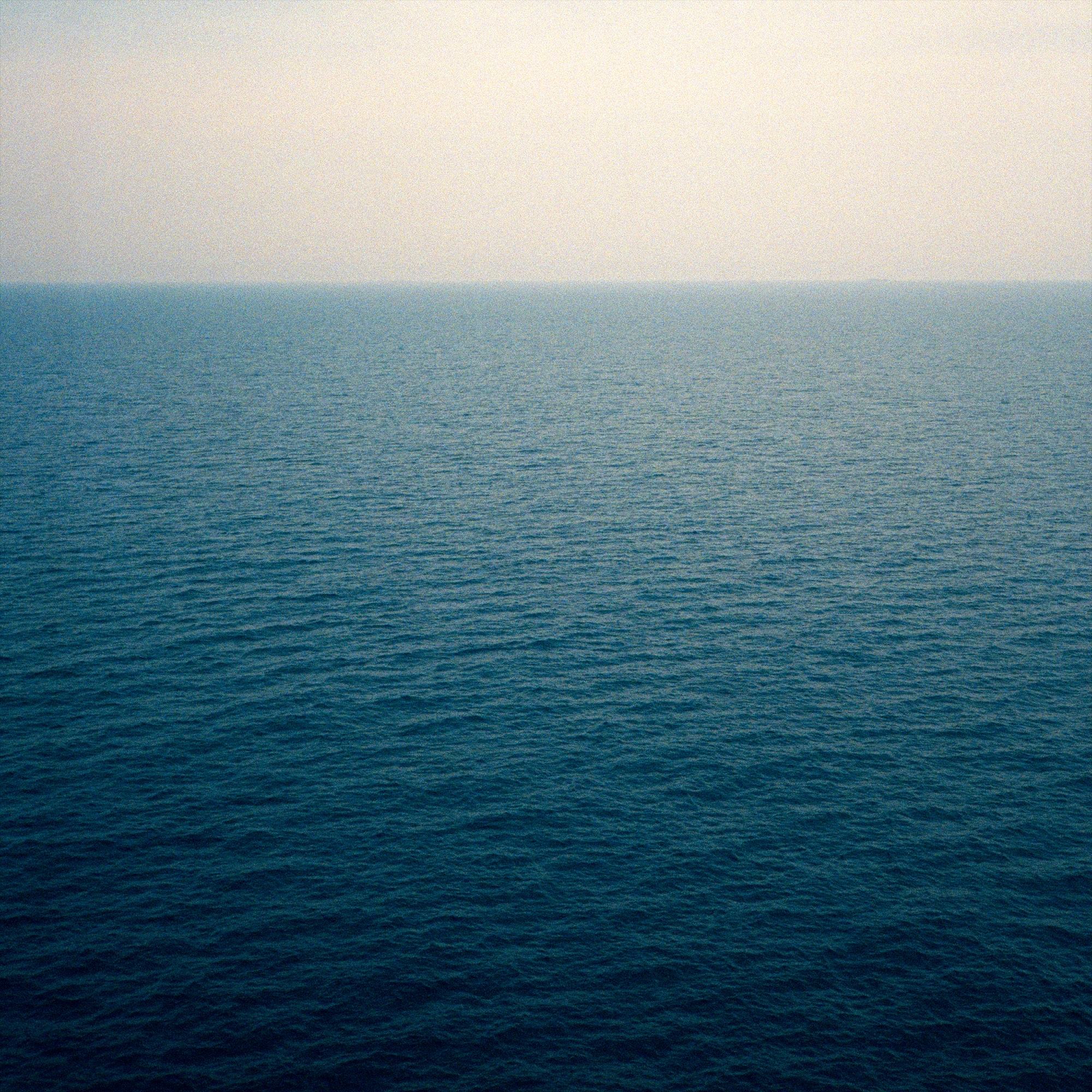
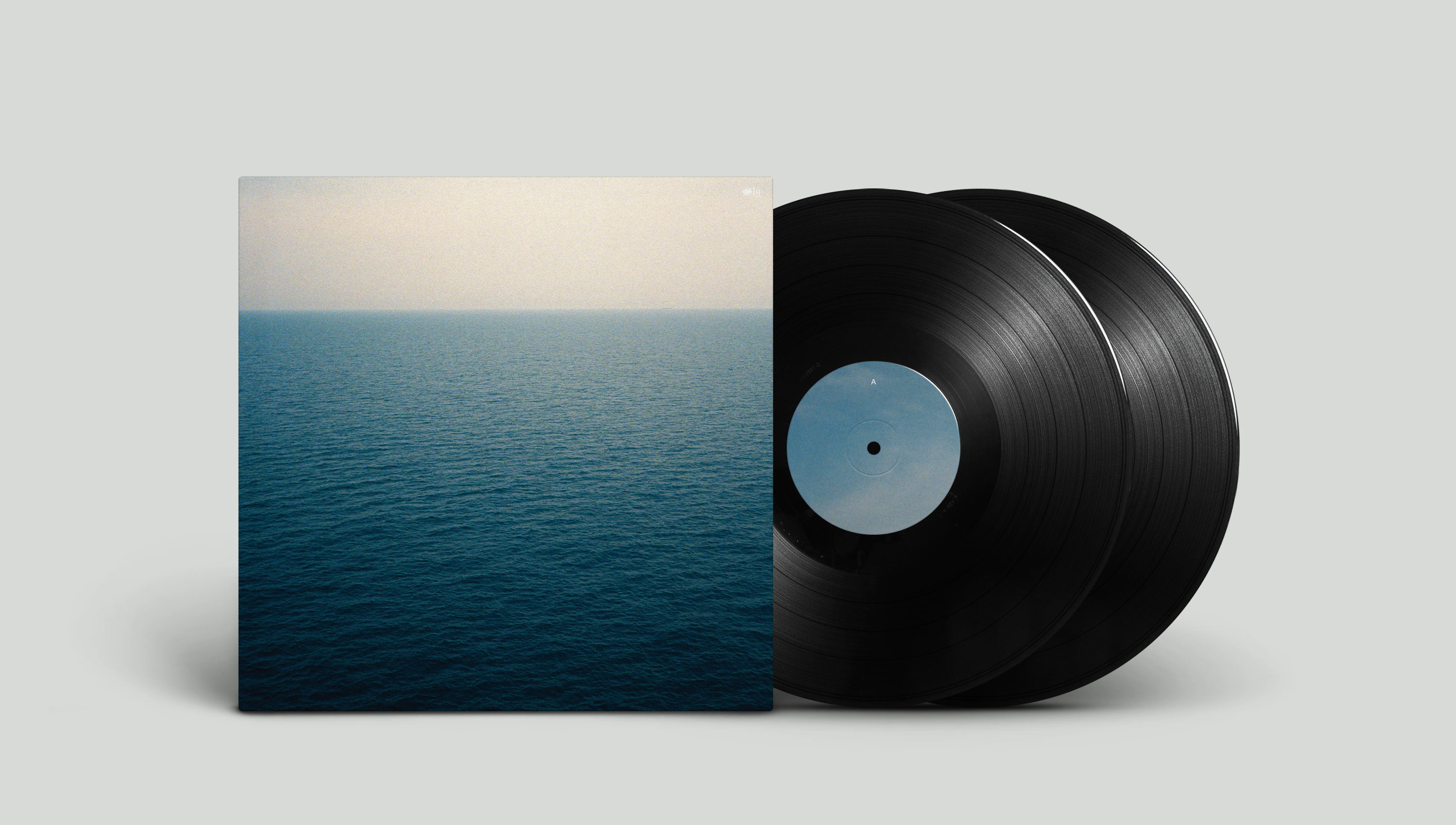
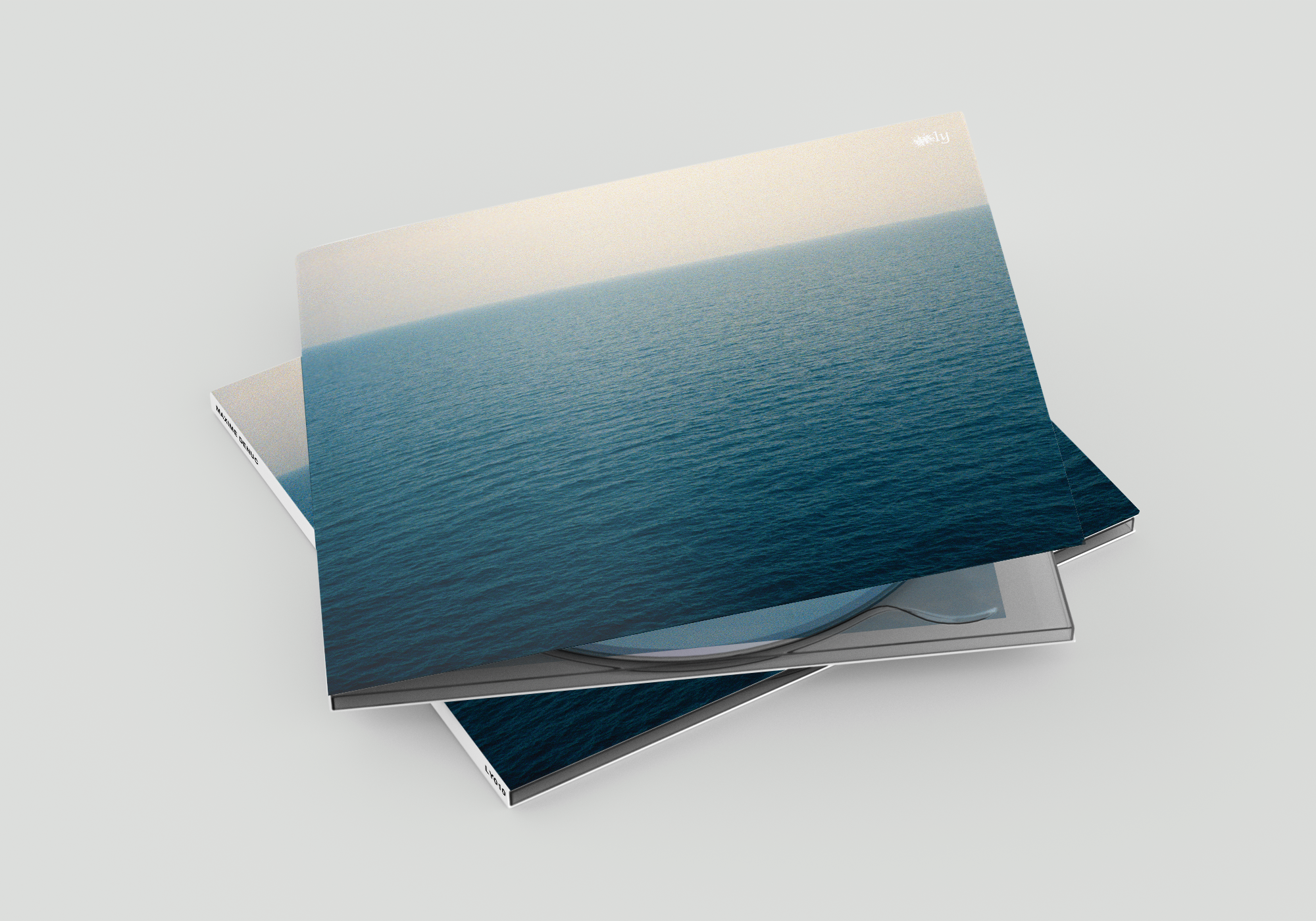
Named after a now-shuttered nightspot that overlooked the beach on Italy's picturesque Tuscan coast, Maxime Denuc's 'Club Imperiale' is a work of speculative historical fiction, a record that imagines a point of creative symbiosis between the Catholic church and the ecstatic dancefloors of the early '90s. Using a MIDI-controlled pipe organ, Denuc creates dense clouds of impossible-to-play notes that ricochet backwards and forwards through history, from Rome's reverberant cathedrals to the white, sandy beaches of the Balearic Islands. Not simply an album of trance and techno music performed on the organ, 'Club Imperiale' is a byzantine mass of references and lived experiences that considers the physical impact of sound, architecture and setting - and Denuc can trace its genesis to a single moment. Two years ago, the Brussels-based French composer was forwarded a surprising video by a Belgian fan. It was shot during a Wedding at a church in Menorca, where the organist was playing 'Infinite End', the lead track from 2022's 'Nachthorn'. Immediately, Denuc knew that this was the thematic backdrop he'd been waiting for; he imagined the aftermath of the event, wandering through small villages and teetering on a cliff's edge, finding a provincial nightclub and retracing his steps back to the beach to witness the sunrise.
This time around, Denuc was gifted the time and the access he needed to fully refine his concept. The technical side of the process had already been solved; after recording 'Nachthorn', he was now very confident with his system, able to control the pipe organ's keyboards, stops and pedals incredibly precisely using Max/MSP and OpenSoundControl, or OSC. And his relationship with the St. Antonius Church in Düsseldorf had deepened significantly. The cantor offered him a three or four days each month for a year to record the project and Denuc jumped at the chance. He moved into a small apartment nearby and spent every available hour behind the organ, working from 9AM until 5PM, stopping for mass and then returning for another long session, heading back to his studio on the off days to listen back to the recordings and plan fresh approaches. This allowed him to sculpt the experience meticulously, thinking about the history of sacred music and considering the real reasons that its compositions have lingered in the secular consciousness for so long. He wanted to concentrate on the visceral acoustic qualities of the church itself, so used a spatial multi-microphone setup to situate listeners between the concrete walls, fabricating an acoustic experience that's multi-dimensional and cinematic.
And the music itself also had to completely validate Denuc's themes. His compositions needed to feel like waves lapping at the shore, humid air rushing through aging pipes and hazy rave memories imprinting themselves on pliant brains. So on opening track 'Hallucinogen', Denuc reaches back to the mid-'90s directly, directly referencing 'LSD', an enduring psychedelic trance anthem penned by Shpongle's Simon Posford. The track interpolates a minuscule section of Posford's original, mapping its brain-tickling squelches to the pipe organ and using the church's natural reverb to capture the vast majesty of the building. "I tried to construct a whole world on top of it," Denuc explains. The album's aquatic themes meanwhile make themselves visible on 'Atlantis', the first example of Denuc's most recent compositional breakthrough, when he realized that using extremely short note repetitions he could create a seemingly continuous drone that shimmered like the surface of water. Imagining a dazzling white church in the Balearics, Denuc pens a revisionist trance anthem on 'Everytime', enhancing the imagery that inspired the record and letting the core motif bounce around the church walls.
These core elements course through 'Club Imperiale', folding in on themselves and melting into each other. Using his own hand-built Max/MSP sequencer, Denuc flutters towards the sun on 'La Paloma', noting the similarities between baroque music and progressive trance. And on the title track, Denuc hits the album's dreamy emotional core, a space where the afterparty begins in earnest, heralding the blurry, mirage-like second half of the record, where natural delays and breathy emotional traces seem to dissolve the very fabric of time. Moving through the dramatic 'Plasters Figures' and the '90s music video atmosphere of 'Impreza', 'Club Imperiale' concludes with 'Pegasus', a long chord sequence that heads steadily downwards into contemplative reminiscence, never quite taking flight. Even the best parties come to an end eventually.
Composed and programmed for MIDI-controlled organ by Maxime Denuc. Produced and mixed by Raphaël Hénard at Studio La Savonnerie, Brussels. Recorded by Harry Charlier at Sankt Antonius Kirche, Düsseldorf-Oberkassel (27–28 March 2025). Mastered by Giuseppe Ielasi. Photography by Georg Gatsas.
Thanks to Markus Hinz, Kathrin Jentjens, Rainer Bahlmann, Sankt Antonius und Benediktus, Caterina Barbieri, Ruben Spini, Pierre Templé, Jonathan Martin, Tamara Gvozdenovic, Xavier Meeus at Centre Henri Pousseur, Julien Carpentier, Aymeric de Tapol, Arjan Rietveld, Benedikt Aufterbeck at Sinua, Haleh Zahedi & Josquin Denuc. In memory of Michel Denuc. ®© light-years in association with !K7 Music, 2026.
Club Imperiale is out now on light-years. Listen and order it on Bandcamp.